
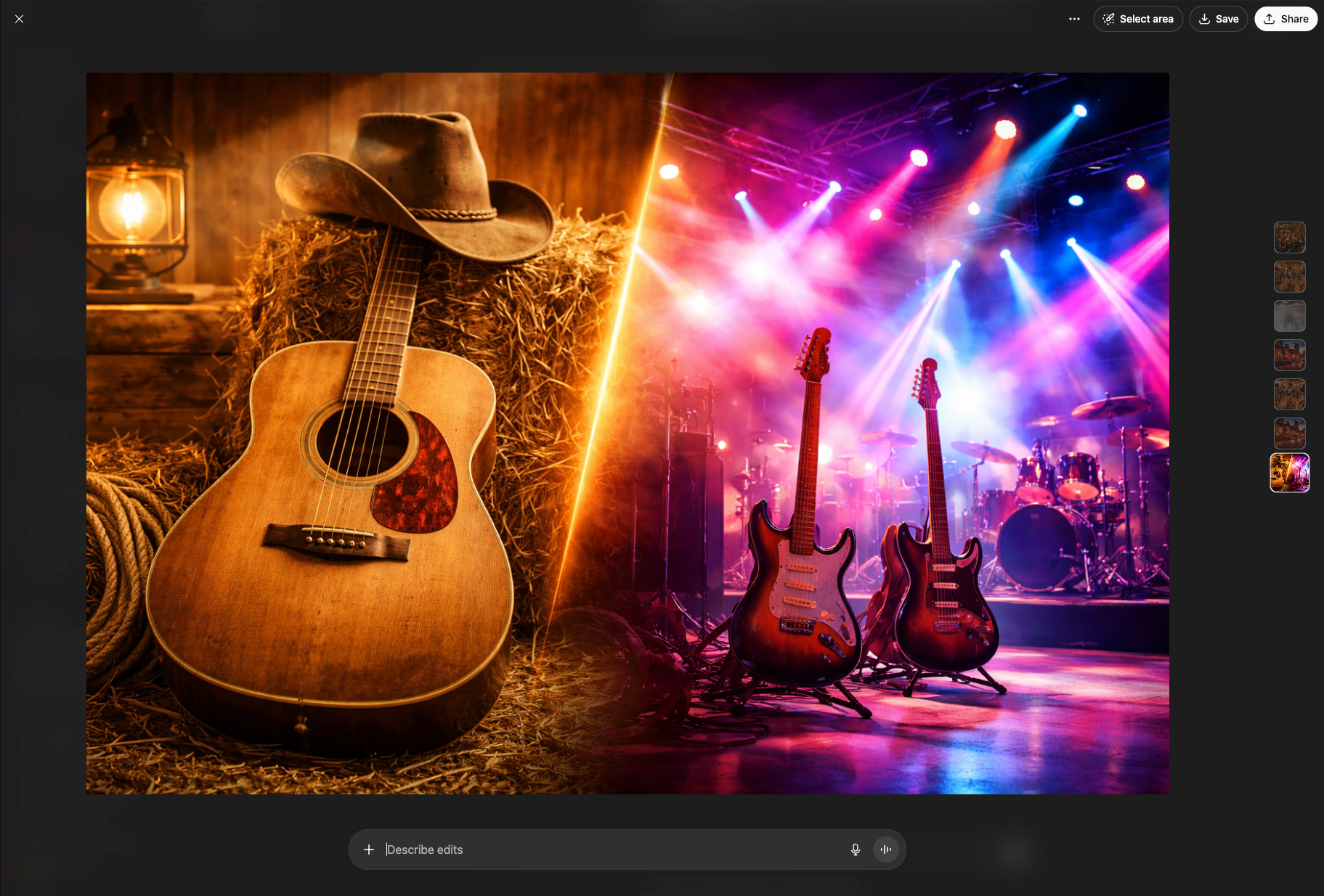
Ask a room full of country fans whether pop country is real country and you’ll get an argument that lasts longer than a Kenny Chesney set. It’s the genre’s longest-running debate, and both sides have points worth hearing.
What “Traditional” Country Actually Means
When people say “traditional country,” they’re usually talking about music built on acoustic instruments (guitar, fiddle, steel guitar, upright bass), lyrics that tell a specific story, and vocals that prioritize feeling over polish. Think Hank Williams, Merle Haggard, George Jones, Loretta Lynn. The songs were often about working-class life, heartbreak, drinking, God, or some combination of all four. The production was spare enough that you could strip it down to one voice and one guitar and the song would still work.
The Bakersfield sound of the 1960s (Buck Owens, Merle Haggard) pushed against the slick Nashville production of that era, and the Outlaw movement of the 1970s (Willie Nelson, Waylon Jennings) pushed even harder. Both were reactions to the feeling that country was getting too polished and losing its edge. This tension between tradition and mainstream appeal isn’t new. It’s been part of the genre since the 1950s.
How Pop Country Happened
Shania Twain’s “Come On Over” (1997) sold over 40 million copies worldwide by blending country songwriting with pop production. Garth Brooks was already filling arenas with a rock-influenced stage show. By the early 2000s, the crossover approach was proven commercially, and Nashville’s labels leaned into it.
The bro-country wave of the early 2010s took it further. Florida Georgia Line’s “Cruise” spent 24 weeks at number one on the Hot Country Songs chart, partly thanks to a remix featuring Nelly. Luke Bryan, Jason Aldean, and Sam Hunt pushed the sound toward hip-hop beats, programmed drums, and lyrics about trucks, girls, and cold beer that followed a nearly identical template. Critics coined the term “bro-country” and it wasn’t a compliment.
The current landscape is more varied. You’ve got Morgan Wallen mixing Southern rock with hip-hop influence, Lainey Wilson doing throwback country with a modern edge, and Zach Bryan writing confessional folk-country that sounds nothing like mainstream Nashville. The genre hasn’t settled on one direction, which is either exciting or exhausting depending on who you ask.
The Case for Keeping It Traditional
Traditionalists have a reasonable argument. When a country song uses drum machines, synthesizers, and vocal processing indistinguishable from a pop record, calling it “country” starts to feel like a marketing decision rather than a genre description. The fiddle, steel guitar, and acoustic guitar aren’t just decorative. They’re the instruments that give country its sound. Remove them and you’ve removed the thing that makes the genre distinct.
There’s also the songwriting question. Country’s greatest strength has always been storytelling, and the best country songs are specific. “He Stopped Loving Her Today” tells one man’s story. “Mama Tried” is about a particular failure. The bro-country formula of vague references to small towns, tailgates, and pretty girls isn’t storytelling in the same sense. It’s scenery without a story.
The Case for Letting It Evolve
On the other hand, every generation has accused the next of ruining country music, and the genre is still here. The Nashville Sound of the late 1950s added string sections and background vocals, and traditional fans hated it. Now those records are considered classics. Garth Brooks brought rock energy to country in the 1990s and purists said it wasn’t real country. Now he’s one of the best-selling artists in any genre.
Pop country also brings in new listeners who might eventually dig deeper into the catalog. Someone who starts with Sam Hunt might end up discovering Townes Van Zandt. That pipeline from mainstream to traditional has always existed, and shutting down the entry point doesn’t protect the genre. It just shrinks the audience.
Where Things Stand Now
The most interesting thing happening in country right now is that the traditional and progressive camps are both thriving at the same time. Tyler Childers, Sturgill Simpson, Charley Crockett, and Sierra Ferrell are making music that would’ve fit on country radio in 1975. Meanwhile, artists like Kane Brown and Maren Morris are pulling in listeners from pop and R&B. Both of these things can be true at once. The genre is big enough.
The debate will keep going, and it probably should. When people argue passionately about what country music is and isn’t, it means they care. That’s better than indifference.
Leave a Reply