
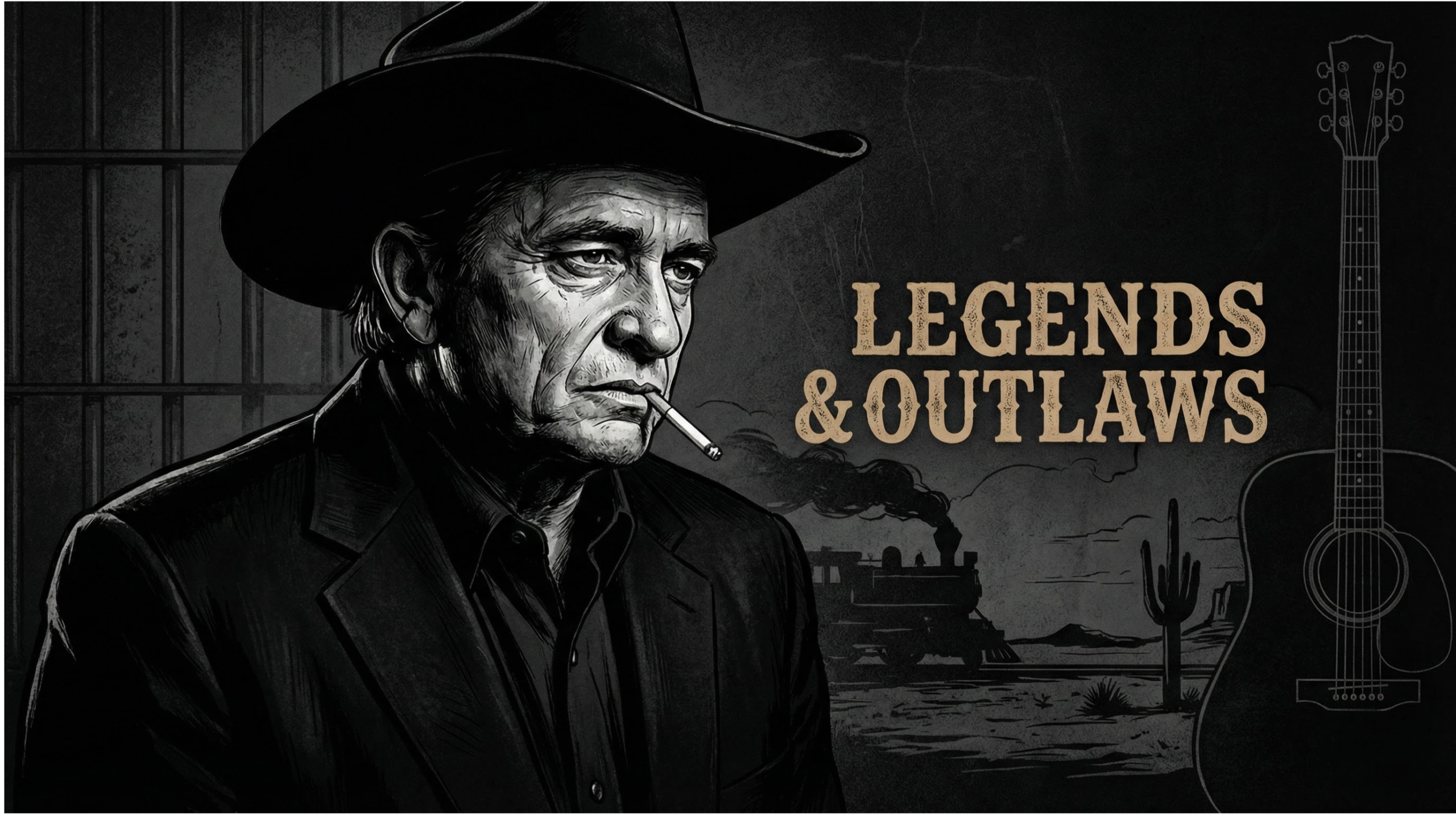
From the cotton fields of Arkansas to the hallowed halls of music fame, Johnny Cash carved an indelible mark on the landscape of American music. Known affectionately as the “Man in Black,” his deep, resonant voice and poignant storytelling resonated with millions, transcending genres and generations.
This comprehensive Johnny Cash biography delves into the life of a true icon — exploring his humble beginnings, his meteoric rise, his struggles, and his enduring legacy. His story is one of resilience, redemption, and unwavering authenticity, making him one of the most influential figures in 20th-century music.
Early Life and Influences: The Roots of a Rebel
Born John R. Cash on February 26, 1932, in Kingsland, Arkansas, to poor cotton farmers, his early life was steeped in the hardships of the Great Depression. The rhythms of gospel music and the toil of farm work profoundly shaped his worldview and musical sensibilities.
The tragic death of his older brother, Jack, in a sawmill accident when Johnny was just 12 years old, left an emotional scar that would influence much of his later songwriting. These formative years instilled in him a deep empathy for the downtrodden and a profound understanding of struggle — themes that would become central to his artistic expression.
His experiences growing up in Dyess, Arkansas, a New Deal agricultural colony, provided a rich tapestry of stories and characters that he would later immortalize in his songs. This period was crucial in forging the raw, authentic voice that would define his career.
The Rise to Fame: Sun Records and the Birth of a Star
After a stint in the Air Force, where he purchased his first guitar, Cash moved to Memphis, Tennessee, in 1954. It was there that he auditioned for Sam Phillips’ Sun Records — the legendary label that launched the careers of Elvis Presley and Jerry Lee Lewis.
Initially, Phillips was unimpressed with Cash’s gospel songs, urging him to write more commercial material. Cash returned with his band, the Tennessee Two (later the Tennessee Three), and recorded “Hey Porter” and “Cry! Cry! Cry!” in 1955, marking his official debut.
These early recordings, characterized by their distinctive boom-chicka-boom rhythm, quickly gained traction. His first major hit, “Folsom Prison Blues,” released in 1955, cemented his status as a rising star. This period saw the emergence of the raw, unpolished sound that would become synonymous with Johnny Cash songs and set him apart from his contemporaries.
Signature Songs and Musical Style: The Sound of the Soul
Johnny Cash’s musical style was a unique blend of country, rock and roll, gospel, and blues. His deep bass-baritone voice — often described as gravelly yet comforting — was instantly recognizable.
Beyond “Folsom Prison Blues,” his catalog boasts an array of iconic tracks that have become staples of American music:
- “I Walk the Line” (1956) — one of his biggest hits and a testament to his enduring appeal
- “Ring of Fire” — co-written by June Carter Cash and Merle Kilgore
- “Get Rhythm” — a fan favourite showcasing his upbeat, rhythmic style
His songs often explored themes of love, loss, sin, redemption, and social justice, resonating deeply with a diverse audience. He possessed an unparalleled ability to tell stories through music, making each song a vivid narrative that captured the human experience.
The Man in Black and Prison Concerts: A Voice for the Voiceless
The persona of the “Man in Black” emerged as a powerful symbol of solidarity with the marginalized and downtrodden. Cash began wearing all black in the early 1960s, explaining that he did so on behalf of “the poor and the hungry, the old and the sick, the prisoner and the lonely.”
His commitment to those on the fringes of society was further exemplified by his legendary Johnny Cash prison concerts. Starting in the late 1950s, he performed at various correctional facilities — most famously at Folsom Prison in 1968 and San Quentin in 1969.
These performances, captured on the live albums At Folsom Prison and At San Quentin, were groundbreaking. They brought his music and message of hope directly to inmates and challenged societal perceptions of prisoners. Those concerts remain some of the most iconic and impactful performances in music history.
Later Career, Notable Covers, and Enduring Legacy
Johnny Cash’s career spanned nearly five decades, marked by periods of immense success, personal struggles, and remarkable artistic resurgence.
In his later years, he gained a new generation of fans through his American Recordings series with producer Rick Rubin. Starting in 1994, these albums featured stripped-down arrangements and poignant covers of contemporary songs — most notably Nine Inch Nails’ “Hurt,” which became a critically acclaimed and emotionally powerful music video.
His influence extends far beyond country music, touching rock, folk, and alternative genres. He received numerous honours, including:
- Multiple Grammy Awards
- Induction into the Country Music Hall of Fame
- Induction into the Rock and Roll Hall of Fame
- Induction into the Gospel Music Hall of Fame
His life and career were immortalized in the 2005 biopic Walk the Line, starring Joaquin Phoenix and Reese Witherspoon.
Personal Life and Relationships: Love, Struggle, and Redemption
June Carter Cash was not only his musical collaborator but also his rock and the love of his life. Their tumultuous yet enduring relationship — marked by his struggles with addiction and her unwavering support — became a central part of his story. They married in 1968 and remained together until her death in 2003, just months before his own passing. Their duets, such as “Jackson,” are legendary.
Cash’s personal life was often as dramatic as his songs, filled with highs and lows. Yet his journey towards redemption and his deep faith were constant themes. He traditionally began his concerts by introducing himself with “Hello, I’m Johnny Cash” — a simple yet profound statement that encapsulated his authentic and approachable persona.
When did Johnny Cash die? He passed away on September 12, 2003, at the age of 71, leaving behind a legacy that continues to inspire and resonate.
Conclusion: The Man, The Music, The Legacy
Johnny Cash’s biography is a testament to the power of music, the resilience of the human spirit, and the enduring appeal of authenticity. From his early life in rural Arkansas to global superstardom, Cash remained true to himself and his message.
He was more than just a musician — he was a storyteller, a voice for the voiceless, and a cultural icon whose impact on music and society is immeasurable. His songs, filled with tales of struggle, faith, and redemption, continue to captivate audiences worldwide.
His legacy lives on through his timeless recordings, his powerful message, and the countless artists he inspired. Explore the rich discography of Johnny Cash and experience the profound artistry of the Man in Black for yourself.
Leave a Reply