
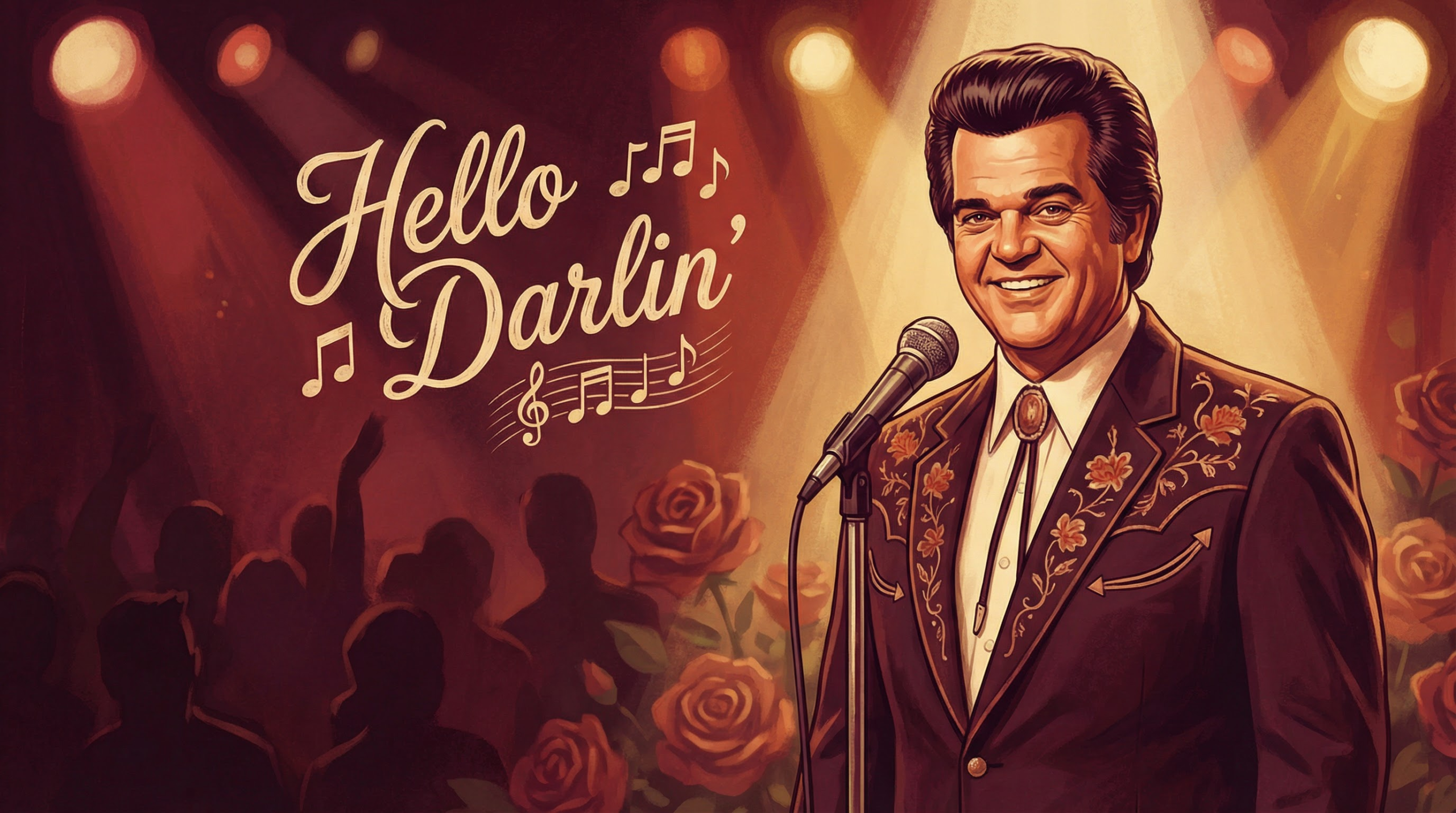
Conway Twitty biography is a journey through the life of a true American music icon. From his humble beginnings in rural Mississippi to becoming one of country music’s most celebrated figures, Harold Lloyd Jenkins, known to the world as Conway Twitty, carved an indelible mark on the hearts of millions.
His distinctive voice, charismatic stage presence, and a knack for delivering heartfelt lyrics propelled him to unparalleled success across multiple genres. This comprehensive look into his life explores the pivotal moments, musical evolution, and enduring legacy of a man who transcended musical boundaries and became a household name.
Prepare to delve into the fascinating story of Conway Twitty, a man whose music continues to resonate with fans old and new.
Early Life: The Genesis of a Legend
Born Harold Lloyd Jenkins on September 1, 1933, in Friars Point, Mississippi, Conway Twitty’s early life was far from the glitz and glamour of Nashville. His family, of Welsh descent, moved to Helena, Arkansas, when he was just 10 years old. It was in Helena that young Harold’s musical inclinations first blossomed.
By the age of 10, he was already performing on local radio, and at 12, he formed his first singing group, the Phillips County Ramblers, which even had its own Saturday morning show on KFFA.
Beyond music, Jenkins was also a talented baseball player, boasting an impressive .450 batting average in high school. He received an offer from the Philadelphia Phillies, but fate had other plans.
After serving in the U.S. Army in the Far East, where he entertained fellow soldiers with his group, the Cimmarons, his passion for music ultimately overshadowed his baseball aspirations. This early exposure to performing and his natural talent laid the groundwork for the remarkable Conway Twitty career that was to follow.
From Harold Jenkins to Conway Twitty: The Birth of a Stage Name
In 1957, Harold Lloyd Jenkins made a pivotal decision that would forever change his trajectory: he adopted the stage name Conway Twitty. The story behind the name is as intriguing as the artist himself.
According to Fred Bronson’s The Billboard Book of Number One Hits, Twitty chose the name by combining two towns on a map: Conway, Arkansas, and Twitty, Texas. While Twitty himself confirmed this on The David Letterman Show in 1989, his manager, Don Seat, offered a different account, suggesting his girlfriend came up with the name much earlier. Regardless of its exact origin, the name Conway Twitty became synonymous with musical versatility and success.
Career Beginnings: Rock and Roll Rebel to Country Crooner
Twitty’s musical journey began in the vibrant world of rock and roll. Inspired by Elvis Presley, he started writing rock and roll material and formed a band called The Rockhousers. He even recorded at Sun Studios in Memphis, though none of his recordings were released at the time.
His big break came in 1958 with the release of “It’s Only Make Believe.” This song, initially a B-side, soared to the top of the Billboard pop music charts in the U.S. and 21 other countries, selling over four million copies and earning a gold disc.
Many listeners initially mistook it for an Elvis Presley song due to vocal similarities. Twitty continued his rock and roll success with hits like “Danny Boy” and “Lonely Blue Boy.” However, by 1965, disillusioned with the rock and roll scene, he made a decisive shift towards country music, a genre he had always wanted to pursue.
Rise to Fame: A Country Music Powerhouse
The transition to country music wasn’t without its challenges. Some country radio stations were hesitant to play his music, still associating him with rock and roll. Yet, Twitty’s undeniable talent and perseverance paid off. In July 1968, he scored his first top-five country hit, “The Image of Me,” followed by his first number-one country song, “Next in Line,” in November of the same year. This marked the beginning of an extraordinary run of success in country music.
His career truly soared in 1970 with the release of “Hello Darlin’,” a song that spent four weeks at the top of the country chart and remains one of his most iconic tunes. The early 1970s also saw the beginning of his legendary duets with Loretta Lynn. Their first hit, “After the Fire Is Gone” (1971), was followed by a string of successes including “Lead Me On” (1971), “Louisiana Woman, Mississippi Man” (1973), and “Feelins’” (1975).
Together, Conway and Loretta, as they were affectionately known, won four consecutive Country Music Association awards for Vocal Duo of the Year (1972–1975), solidifying their status as one of country music’s most beloved pairings. This period cemented his reputation as a country music powerhouse, showcasing the depth and versatility of his songwriting.
Greatest Hits & Songs: A Timeless Repertoire
Conway Twitty’s discography is a treasure trove of country music classics. His ability to convey raw emotion and tell compelling stories through his songs made him a consistent chart-topper. Beyond “Hello Darlin’” and his duets with Loretta Lynn, his greatest hits include “You’ve Never Been This Far Before,” which topped the country charts for three weeks in 1973 and even crossed over to the pop charts, reaching number 22.
Other notable number-one hits include “Linda on My Mind,” “Don’t Take It Away,” “I May Never Get to Heaven,” “Happy Birthday Darlin’,” and his successful remakes of pop hits like “The Rose” and “Slow Hand.” He achieved an astonishing 40 number-one hits on Billboard‘s Hot Country Songs chart, a record that stood for two decades until surpassed by George Strait. His enduring popularity is a testament to the timeless appeal of his music and his profound connection with his audience.
Legacy & Impact: The High Priest of Country Music
Conway Twitty’s legacy extends far beyond his impressive chart statistics. He was known as “The High Priest of Country Music,” a nickname bestowed upon him by comedian Jerry Clower, reflecting the almost religious fervor of his fanbase. His influence on country music is undeniable, paving the way for future artists with his blend of rock and roll energy and country storytelling.
Twitty was inducted into both the Country Music Hall of Fame and the Rockabilly Hall of Fame, a rare honor that speaks volumes about his impact across genres. His entrepreneurial spirit was also evident in “Twitty City,” a country music entertainment complex he built in Hendersonville, Tennessee. Though it closed after his death, it was a popular tourist attraction throughout the 1980s and early 1990s, showcasing his dedication to his fans and the music industry.
His personal life also saw its share of challenges, including a notable tax case where he successfully argued that repaying investors in his defunct Twitty Burger chain was a necessary business expense to protect his reputation with his country music fans — a memorable moment that underscored his deep connection to his audience.
Sadly, Twitty’s life was cut short on June 5, 1993, when he died at the age of 59 from an abdominal aortic aneurysm after falling ill during a performance. His passing shocked the music world, but his music and memory live on. His duets remain beloved by fans and are a testament to his collaborative spirit.
Awards and Recognition
Conway Twitty’s immense talent was recognized with numerous awards throughout his career:
Academy of Country Music
- Top Vocal Duo (with Loretta Lynn): 1971, 1974, 1975, 1976
- Album of the Year (Feelins’, with Loretta Lynn): 1975
- Top Male Vocalist: 1975
- Pioneer Award: 2008
Country Music Association
- Vocal Duo of the Year (with Loretta Lynn): 1972, 1973, 1974, 1975
Country Music Hall of Fame and Museum
- Posthumous inductee (1999)
Grammy Awards
- Best Country Performance by a Duo or Group with Vocal (“After the Fire Is Gone,” with Loretta Lynn): 1971
- Hall of Fame Award (“Hello Darlin’”): 1999
Rockabilly Hall of Fame
- Posthumous inductee
Conclusion: The Enduring Echo of a Country Music Icon
Conway Twitty’s journey from Harold Lloyd Jenkins to a country music legend is a testament to his talent, versatility, and unwavering dedication to his craft. His ability to seamlessly transition from rock and roll to country, coupled with his captivating storytelling and powerful vocals, ensured his place in music history.
His songs continue to be cherished, and his influence can still be heard in the voices of contemporary country artists. Explore the vast catalog of Conway Twitty’s music and discover why he remains one of the most beloved and respected figures in country music.
What’s your favorite Conway Twitty song? Share it with us in the comments below!
Leave a Reply