
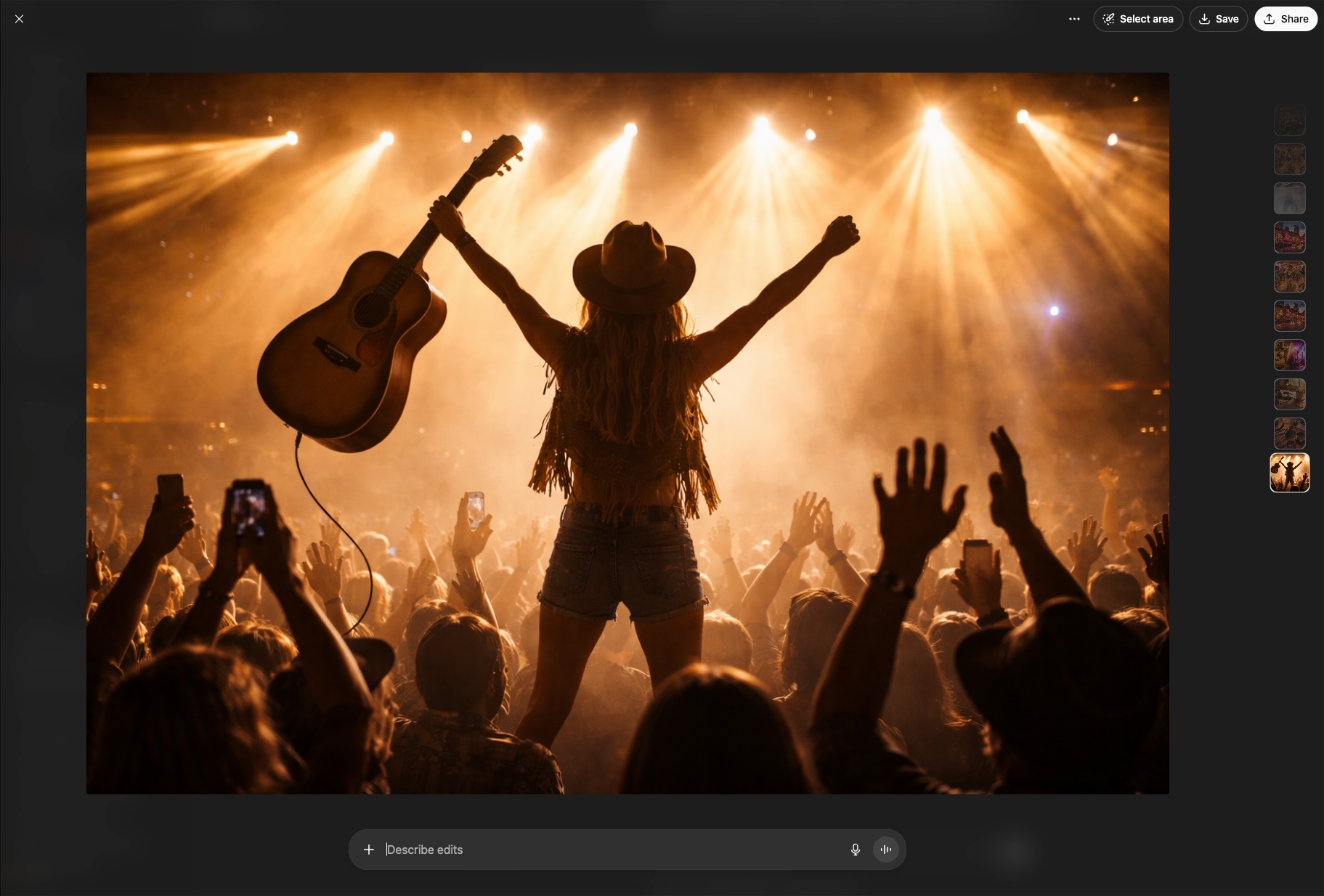
Country radio has a gender problem, and it’s backed up by data. For years, female artists have been systematically underplayed on country radio despite consistently strong album sales, streaming numbers, and concert attendance. The situation has improved slightly, but the gap is still significant. Here’s what’s happening and who’s pushing things forward.
The Numbers
Studies from organizations like SongData and Jada Watson’s research at the University of Ottawa have tracked the decline of women on country radio since the early 2000s. At its worst point around 2018-2019, women accounted for roughly 10-15% of country radio airplay. That’s not a market preference. It’s a programming decision. The so-called “tomato rule” was an informal guideline in country radio that discouraged playing two female artists back-to-back, based on the assumption that listeners would tune out. The assumption was never backed by audience research, but it shaped playlists for years.
For context, in the early 1990s, women regularly held multiple spots in the country Top 10 simultaneously. Reba McEntire, Patsy Cline, Loretta Lynn, Dolly Parton, and Tammy Wynette had already proven there was a massive audience for female voices in country. The decline wasn’t about talent or demand. It was about industry gatekeeping.
Who’s Changing Things
Kacey Musgraves won Album of the Year at the Grammys in 2019 for “Golden Hour,” an album that country radio largely ignored. The disconnect between critical and commercial success and radio airplay highlighted the problem more clearly than any think piece could. Musgraves proved you could be the most acclaimed country artist alive and still not get played on country radio.
Miranda Lambert has been the most consistent female presence in country for the last fifteen years, winning more ACM Awards than any artist in the show’s history (male or female). Carrie Underwood has used her platform and massive audience to maintain relevance on her own terms. And newer artists like Lainey Wilson, who won CMA Entertainer of the Year, and Ashley McBryde, whose songwriting is as strong as anyone’s in Nashville, are proving that the next generation of women in country isn’t waiting for permission.
Maren Morris’s public criticism of the industry’s gender imbalance put the conversation in mainstream media. Before leaving the genre entirely, she repeatedly called out specific instances of inequity, which made her polarizing within Nashville but helped force the conversation. The Chicks (formerly Dixie Chicks) went through something similar two decades earlier when their political comments led to a radio boycott, proving that women in country face consequences for speaking up that male artists generally don’t.
Fans Are Part of the Fix
Social media has given fans tools to push back. Campaigns on Twitter and Instagram calling out specific stations for underplaying women have gotten attention. Fans have organized streaming parties to boost female artists’ chart positions, and they’ve used platforms like TikTok to break songs that radio wouldn’t touch. Chapel Hart gained national attention after a TikTok video of their original song went viral, leading to a deal with a major label and appearances on mainstream TV.
The streaming era has also helped bypass radio gatekeepers entirely. An artist doesn’t need radio airplay to build a career if they can generate millions of streams independently. That shift in power benefits everyone who was being excluded from traditional channels.
Where Things Stand
Progress has been slow but measurable. Female representation on country radio has ticked up from its lowest points, and festivals have made more visible efforts to book women. The CMAs and ACMs have nominated more women in major categories in recent years. But the gap is still there, and pointing to a few success stories doesn’t mean the structural problems are solved.
The talent has never been the issue. Right now, some of the best songwriting in Nashville is coming from women. The question is whether the industry will catch up to what listeners already know.
Leave a Reply